Tel: +86-20-3106 0625 Email: sales@motechmotor.com

Your location:Home >> APPLICATIONS >> Applications
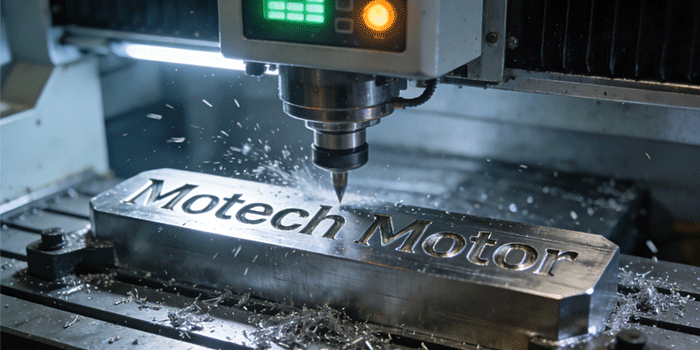
ApplicationsEngraving and cutting machines are widely used in industries such as woodworking, metal processing, signage production, textiles, electronics, and advertising. Whether it is a CNC router, laser engraver, plasma cutter, or precision cutting table, motion control is one of the most critical factors affecting machine performance.
Among the different drive solutions available, stepper motors remain a popular choice for engraving and cutting equipment because of their high positioning accuracy, stable low-speed performance, simple control, and cost-effectiveness. For many manufacturers and machine builders, stepper motors provide an ideal balance between performance and budget.
In this article, we will explore how stepper motors are used in engraving and cutting machines, why they are important, and how to choose the right stepper motor solution for different applications.
What Is a Stepper Motor?
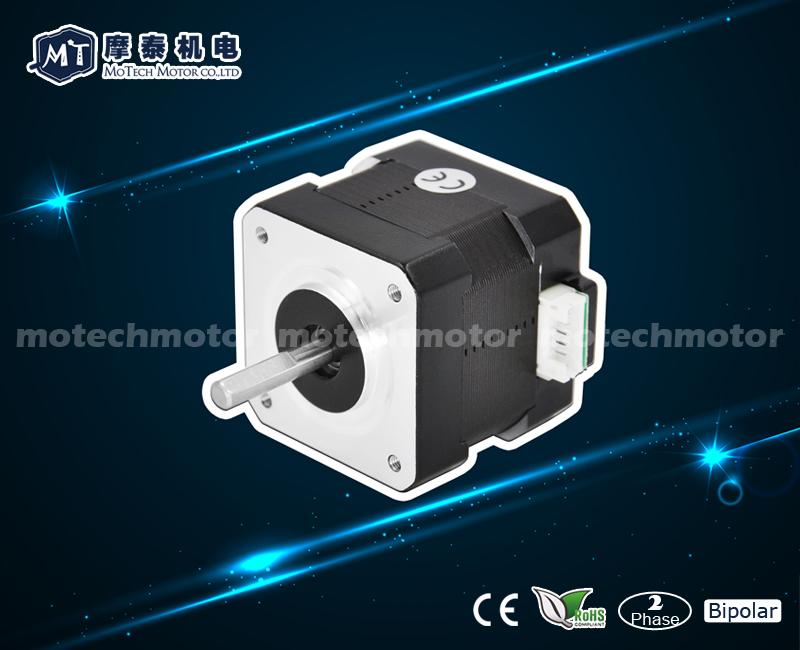
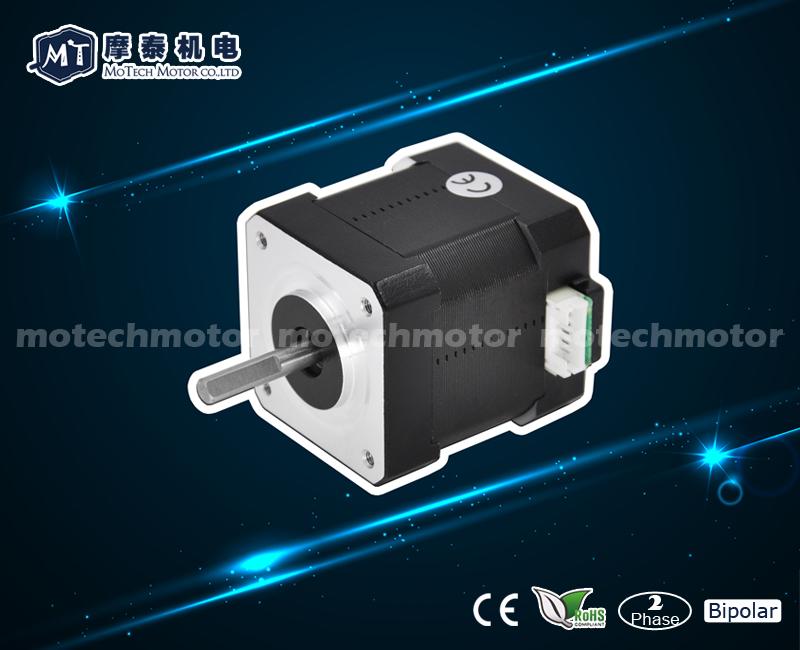
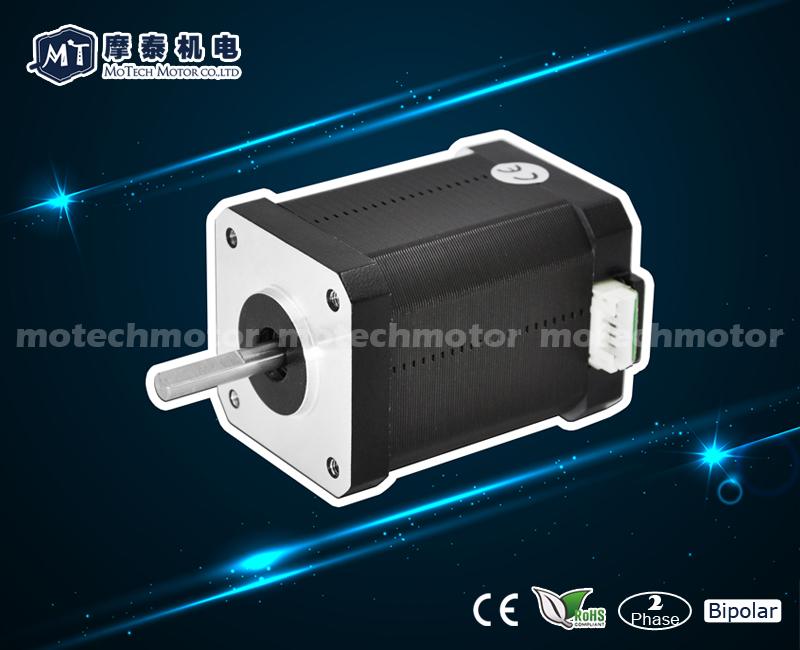
A stepper motor is an electric motor that moves in precise step-by-step increments. Unlike conventional motors that rotate continuously, a stepper motor divides a full rotation into many equal steps. This design allows accurate control of position, speed, and direction without requiring a complex feedback system in many applications.
Because engraving and cutting machines rely on precise movement along the X, Y, and sometimes Z axes, stepper motors are especially suitable for these systems. They enable controlled motion for tool heads, laser heads, cutting platforms, and feeding mechanisms.
Basic Working Principle of a Stepper Motor
A stepper motor converts digital pulse signals into mechanical motion. The motor rotates step by step according to the input pulses from the driver and controller. This step-by-step movement makes it easier to achieve accurate positioning and repeatable operation.
Why Stepper Motors Are Used in Engraving and Cutting Machines
Stepper motors are widely used in engraving and cutting equipment because they meet many of the key requirements of industrial motion systems.
1. High Positioning Accuracy
Accuracy is essential in engraving and cutting processes. Even a small positioning error can affect cutting quality, engraving detail, or material waste. Stepper motors are designed to move in fixed increments, which makes them well suited for applications where repeatable positioning is required.
2. Excellent Low-Speed Control
Many engraving and cutting applications require smooth movement at relatively low speeds, especially when processing detailed designs or small parts. Stepper motors perform very well in low-speed operation, allowing equipment to maintain stability and motion consistency during complex tasks.
For example, when a laser engraving machine creates intricate logos or fine decorative patterns, controlled low-speed movement is essential to achieve clear and accurate results.
3. Fast Response and Easy Start-Stop Operation
Engraving and cutting machines often require frequent starts, stops, and directional changes. Stepper motors respond quickly to control signals, making them highly effective in systems with repetitive motion sequences and short movement cycles.
This quick response is especially useful in CNC cutting tables, plotters, and automated marking equipment, where the motor must follow programmed paths with high reliability.
4. Cost-Effective Motion Control Solution
Compared with servo systems, stepper motors usually offer a more economical solution for many engraving and cutting machines. For equipment manufacturers that need reliable performance while maintaining competitive production costs, stepper motors are often the preferred choice.
This is particularly true for small and medium-sized machines, entry-level CNC equipment, desktop laser engravers, and customized OEM systems.
5. Simple Control System Integration
Stepper motors are relatively easy to integrate with motion controllers, drivers, and CNC systems. Their control principle is straightforward, which helps reduce system complexity and development time.
For machine manufacturers, this means faster design implementation, simpler commissioning, and easier maintenance.
Main Applications of Stepper Motors in Engraving Machines
CNC Engraving Machines
Stepper motors are commonly used in CNC engraving machines for moving the spindle or engraving head along the X, Y, and Z axes. These machines are widely applied in woodworking, acrylic processing, mold engraving, sign making, and decorative manufacturing.
In these systems, stepper motors support:
-- precise tool positioning
-- stable path tracking
-- smooth curve interpolation
-- accurate repeated engraving operations
For woodworking or advertising sign production, stepper motors help ensure that letters, patterns, and decorative surfaces are engraved with good consistency.
Laser Engraving Machines
Laser engraving machines require highly controlled motion to guide the laser head across the working area. Stepper motors are widely used to drive the movement of the laser head and sometimes the work platform.
Their role includes:
-- moving the laser head precisely along programmed paths
-- controlling engraving speed
-- supporting fine detail reproduction
-- maintaining stable motion during repeated production cycles
Because laser engraving often involves complex shapes and detailed graphics, the motor system must offer both precision and repeatability. Stepper motors meet these needs effectively in many standard laser applications.
Marking and Coding Equipment
In industrial marking machines, stepper motors are often used for positioning the marking head or moving products during coding operations. This is common in packaging, electronics, and product identification processes.
Their advantages in these systems include:
-- accurate positioning for text and serial numbers
-- synchronization with conveyor systems
-- reliable repeated motion for continuous production
Main Applications of Stepper Motors in Cutting Machines
CNC Cutting Machines
In CNC cutting machines, stepper motors control axis movement to guide cutting tools over different materials. These machines may be used for cutting wood, plastic, composite materials, foam, or light metal sheets.
Stepper motors help with:
-- path accuracy
-- controlled cutting speed
-- repeatable dimensional performance
-- synchronized multi-axis movement
For many standard-duty CNC cutting machines, stepper motors provide sufficient torque and precision while keeping machine costs under control.
Laser Cutting Equipment
Laser cutting machines require accurate motion to ensure clean cuts and efficient material utilization. Stepper motors are often used in compact or mid-range laser cutting systems, especially where moderate speed and high control precision are required.
In laser cutting applications, stepper motors contribute to:
-- accurate cutting line execution
-- smooth corner transitions
-- controlled acceleration and deceleration
-- stable movement of the laser assembly
Textile and Fabric Cutting Machines
Automatic fabric cutting and textile processing machines also use stepper motors for controlled feeding, positioning, and cutting operations. In these applications, smooth and accurate movement is important to avoid material distortion and maintain production efficiency.
Stepper motors are suitable for:
-- feeding fabric with stable tension
-- controlling cutting head movement
-- performing repetitive cutting patterns
-- improving precision in batch production
Plasma and Light-Duty Specialty Cutting Machines
Some plasma cutters and specialty cutting equipment also use stepper motors, particularly in systems where cost control and moderate accuracy are more important than extreme speed. In these machines, stepper motors can be used for gantry movement, torch positioning, or feeding systems.
Key Benefits of Stepper Motors in Engraving and Cutting Equipment
Precision and Repeatability
One of the biggest advantages of stepper motors is their ability to repeat the same movement accurately over many cycles. This is important for engraving and cutting machines that handle batch production or repeated design patterns.
Reliable Motion Control
Stepper motors provide consistent motion under properly designed load conditions. For many engraving and cutting machines, this reliability is enough to meet operational requirements without the added complexity of more advanced servo systems.
Flexible Design Options
Stepper motors are available in different frame sizes, holding torques, shaft types, and electrical configurations. This makes it easier for machine manufacturers to select a motor that matches the mechanical structure and performance target of the equipment.
Good Compatibility with Drivers and Controllers
Modern stepper motors can be matched with microstepping drivers and CNC controllers to improve smoothness and motion resolution. This allows machine builders to optimize system performance based on application needs.
Lower System Cost
For many machine manufacturers, cost is a major consideration. Stepper motor systems usually have lower initial costs compared with servo-based motion systems, making them attractive for value-focused equipment design.
Open Loop vs Closed Loop Stepper Motors for Engraving and Cutting Machines
Both open loop and closed loop stepper motors are used in engraving and cutting equipment, depending on machine complexity and performance requirements.
Open Loop Stepper Motors
Open loop stepper motors are widely used in standard engraving and cutting machines. They are suitable when:
-- load conditions are stable
-- speed requirements are moderate
-- machine cost needs to remain competitive
-- the application does not require advanced feedback control
Open loop systems are simple, practical, and cost-efficient for many general-purpose machines.
Closed Loop Stepper Motors
Closed loop stepper motors include feedback mechanisms that improve performance, especially in demanding applications. They are more suitable when:
-- higher speed is required
-- load changes are frequent
-- missed steps must be minimized
-- machine reliability under dynamic conditions is critical
For higher-end CNC routers, fast laser systems, or machines with heavier moving loads, closed loop stepper motors can provide better stability and improved efficiency.
How to Choose the Right Stepper Motor for Engraving and Cutting Machines
Selecting the right stepper motor is important for machine performance and long-term reliability. Several factors should be considered.
Load Requirements
The motor must provide enough torque to move the load smoothly, including the tool head, gantry, worktable, or transmission system. Undersized motors may lead to missed steps or unstable motion.
Speed Requirements
Different machines operate at different speeds. Engraving detailed patterns may require stable low-speed control, while cutting large panels may require faster movement. The motor should match the actual speed range of the application.
Accuracy Requirements
Applications with very fine detail, such as precision engraving or small-format cutting, may require higher-resolution motion. In these cases, motor selection should consider step angle, driver quality, and transmission design.
Working Environment
Dust, vibration, heat, and continuous operation can affect motor performance. For industrial cutting or engraving environments, durable stepper motors with reliable insulation and stable thermal performance are important.
Drive and Controller Compatibility
The stepper motor should be properly matched with the driver, power supply, and motion controller. Good matching improves smoothness, efficiency, and overall machine stability.
Customization Needs
Some equipment manufacturers require customized shafts, cables, connectors, encoders, or mounting structures. Working with an experienced motor supplier can help ensure the motor fits the machine design and application needs.
Common Industries Using Stepper Motors in Engraving and Cutting Equipment
Stepper motors are widely used in machines serving many industries, including:
-- woodworking
-- advertising and signage
-- metalworking
-- textile manufacturing
-- electronics production
-- packaging
-- plastic processing
-- leather cutting
-- acrylic and decorative product manufacturing
Because these industries demand a balance of precision, cost control, and design flexibility, stepper motors remain a strong solution.
Future Trends in Engraving and Cutting Machine Motion Control
As engraving and cutting equipment continues to evolve, motion control systems are also improving. Machine manufacturers are increasingly looking for:
smoother motion performance
-- higher efficiency
-- lower noise
-- better thermal control
-- more compact motor designs
-- intelligent driver integration
Closed loop stepper systems, integrated stepper motors, and customized motion solutions are becoming more common in modern machine development. These trends are helping equipment manufacturers improve product performance while remaining cost competitive.
Conclusion
Stepper motors play a vital role in engraving and cutting machines by providing accurate positioning, stable low-speed performance, fast response, and cost-effective motion control. From CNC engraving machines and laser engravers to textile cutters and automated cutting systems, stepper motors support reliable and efficient machine operation across many industries.
For machine builders and OEM manufacturers, choosing the right stepper motor solution can improve cutting quality, engraving precision, and overall equipment reliability. Whether the application requires an open loop system for standard machines or a closed loop solution for higher performance, stepper motors continue to be one of the most practical and widely used motion control options in the engraving and cutting industry.
If you are looking for a dependable stepper motor solution for engraving and cutting machines, it is important to work with a supplier that can provide consistent quality, suitable technical support, and flexible customization for your equipment design.
Why Choose Motech Motor
Motech Motor is a professional supplier specializing in stepper motors and motion control solutions for industrial applications. Our products are widely used in automation equipment, CNC machines, robotics, packaging machinery, and other precision systems.
We provide a wide range of stepper motor solutions, including:
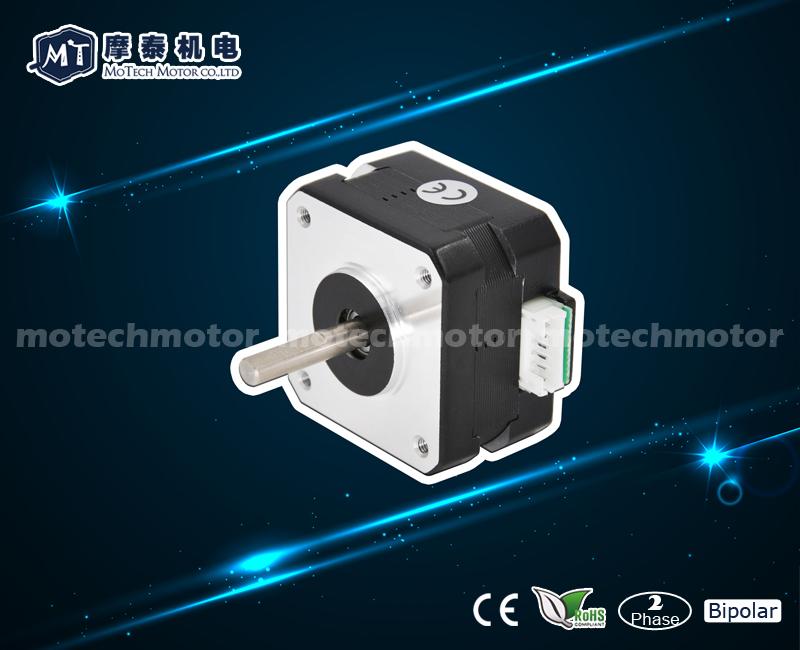
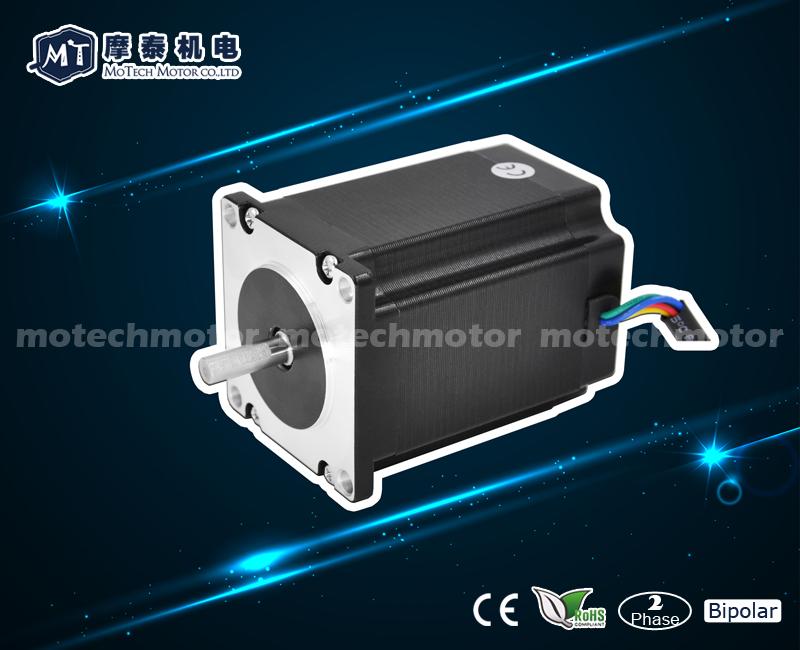
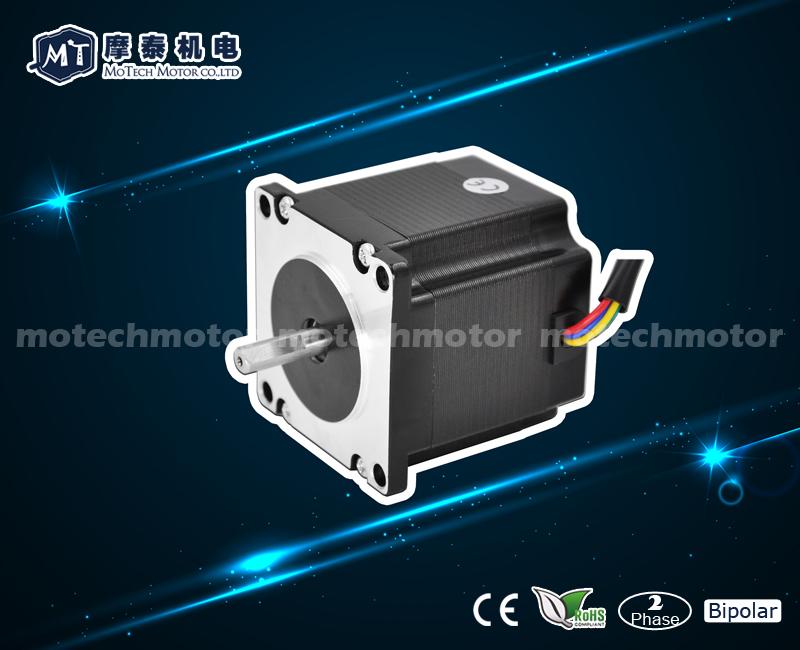
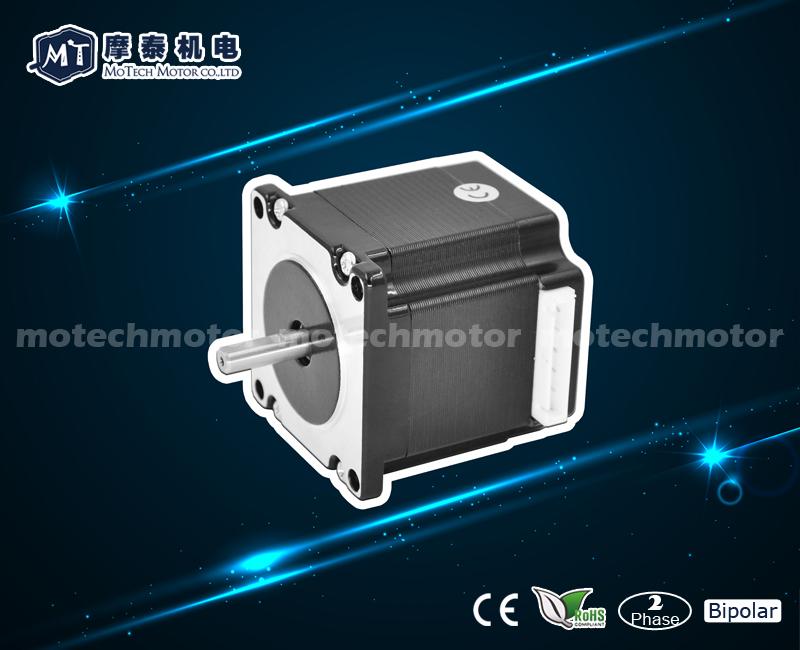
-- Hybrid Stepper Motors (available in NEMA 08, NEMA 17, NEMA 23, NEMA 34 and other sizes)
-- Linear Stepper Motors
-- Closed Loop Stepper Motors
-- Geared Stepper Motors
-- Custom OEM motor solutions
With a strong focus on product reliability, consistent quality, and responsive technical support, Motech Motor works closely with global customers to provide dependable motion control solutions.
Our team understands the needs of international buyers and is committed to delivering professional service, flexible customization, and stable supply capability.
If you are looking for a reliable stepper motor supplier in China, our team is ready to support your project.
For
inquiries or technical support:
sales@motechmotor.com
Visit
us:
www.motechmotor.com


Scan QRCode
Follow Stepper Motors, Step-Servo Motors, Stepper Drivers News
 Tel: +86-20-31060625
 Fax: +86-20-31060635
 Email:sales@motechmotor.com
 Add.:Block 15th, Tian An Hi-tech Ecologocal Park, No.555, Panyu Avenue North, Panyu distrct, Guangzhou, China (511400)